
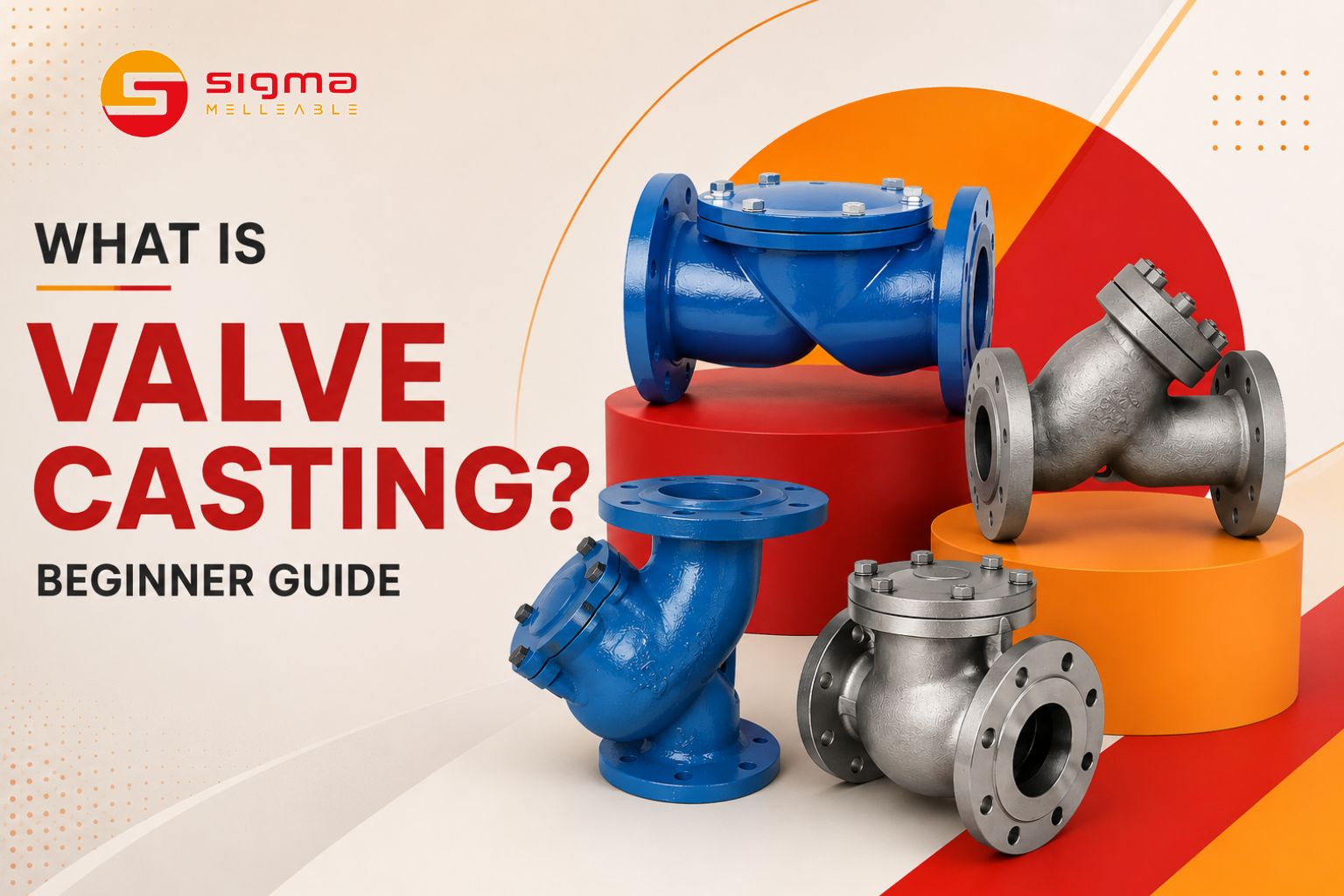
What Is Valve Casting? - Beginner Guide
Valve casting is among the most common manufacturing processes in the industrial sector. Valves play crucial roles in regulating the flow of liquids, gases, and steam via pipes and machines. Therefore, various industries such as oil & gas, water treatment, chemicals manufacturing, and heavy engineering require reliable valve castings.
This beginner’s guide gives a simple explanation of what valve casting is all about, the valve casting process, the industrial casting process of valve castings, and the difference between cast iron valve casting and stainless steel valve castings.
What is Valve Casting?
Valve casting entails the creation of valve parts by pouring molten metals into molds. Once cooled and hardened, the casting is cleaned, machined, and assembled into a complete valve.
Valve casting is important in the manufacture of durable and complicated valve parts suitable for industrial use. It increases durability, minimizes the chances of leaking, and improves longevity.
Importance of Industrial Valve Casting
Proper valve casting helps to effectively control pressure and fluids. As such, industrial valve casting is important since properly made valves help to;
- Control pressure and fluid flow
- Prevent leaks
- Improve efficiency
- Resist high temperatures and corrosion
- Improve equipment lifespan
Common Uses of Industrial Valve Castings
The use of industrial valve casting can be seen in various applications in different industries. Some examples include;
- Oil & gas factories
- Water treatment plants
- Chemical manufacturing facilities
- Power-generating units
- Manufacturing industries
Valve Casting Process
Step-by-Step Valve Casting Procedure
Understanding the steps in the valve casting process makes it easier to comprehend how industrial valve castings are made.
Designing a Valve Pattern
The first step in the valve casting process is designing the valve using engineering designs or CAD programs.
Preparing Valve Casting Mold
The next step involves preparing a valve casting mold. Most foundries use sand to prepare molds in what is called the sand casting method.
Melting Metals
Various types of metals, such as cast iron, stainless steel, carbon steel, and bronze, are heated to melt inside furnaces.
Pouring Molten Metals
The molten metals are carefully poured into molds to avoid casting defects.
Cooling
After being poured, the molten metals are cooled inside molds to develop the required strength and hardness.
Cleaning and Finishing
In this step, extra materials are removed from the casting through grinding and finishing.
Machining and Quality Checks
This step involves machining of castings to ensure proper dimensions. Moreover, the castings go through various tests to guarantee quality.
Types of Valve Castings
Gate Valve Castings
They are used to either block flow completely or allow it.
Globe Valve Castings
They are good for flow regulation and control.
Ball Valve Castings
They provide rapid flow shutdown ability while minimizing leakage.
Butterfly Valve Castings
They are lightweight and small valves that are used for flow control.
Check Valve Castings
Are important in preventing reverse flows.
How to Make Valve Castings
It is common for individuals to ask how to make valve castings. Well, making valve castings involves several stages.
Stages in Valve Castings Production
Some major steps involved in producing valve castings include;
- Valve designing
- Preparation of molds
- Melting of metals
- Pouring molten metals
- Cooling of the metal
- Cleaning and machining
- Quality tests and inspections
- Final assembly
The above valve casting procedure is done through advanced methods by most valve casting manufacturer companies today.
Cast Iron Valve Casting
Reasons why valve castings are often made using cast iron valve casting include their strength and durability.
Advantages
- Affordable
- Great strength and mechanical properties
- Excellent resistance to wear
- Easily machinable
- Best for water application
Typical Applications
- Water supply systems
- Irrigation network
- Fire protection system
- General industrial application
Comparative Difference Between Cast Iron and Stainless Steel Valve Casting
Parameter | Cast Iron | Stainless Steel |
Price | Lower | Higher |
Corrosion Resistance | Moderate | Excellent |
Strength | Good | Excellent |
Resistance to Heat | Moderate | High |
Durability | Good | Superior |
When to Opt for Cast Iron
- Limited budget
- No much corrosion exposure
- Applicable to water systems
When to Opt for Stainless Steel
- Extreme need for corrosion resistance
- Presence of high temperatures
- Hygienic needs
Advantages of Valve Casting Processes
There are various advantages associated with the valve casting process.
They include;
- Ability to manufacture complex parts
- Efficient production
- Low material wastage
- Valve durability
- Suitable for many types of metals
Such advantages make industrial valve casting ideal for large-scale industrial production.
Quality Control in Valve Casting
Quality control is important to guarantee the durability and safety of valve castings. Therefore, valve casting manufacturers conduct
- Pressing test
- Dimensional checks
- Surface inspection
- Non-destructive testing
- Chemical composition tests
Sigma Melleable
Sigma Melleable is a valve casting manufacturer company dedicated to offering reliable industrial valve casting solutions.
Benefits of Sigma Melleable’s Valve Casting Solutions
- High precision engineering
- Advanced valve casting technique
- Durable cast iron valve casting products
- Quality control
- Reliable client support
- Competitive pricing
Sigma Melleable ensures the provision of reliable and durable industrial valve casting solutions.
Conclusion
Valve casting is an important process involved in the production of durable and reliable valve castings. Understanding what valve casting is, the valve casting process, and the differences between cast iron valve castings and stainless steel valve castings enables users to know which to use.
Each process in valve casting, from preparing the mold to performing quality checks, contributes to the production of durable valve castings.
For trusted industrial valve casting solutions, get in touch with Sigma Melleable. They provide quality and reliable valve casting solutions.
How to Reach Us
- Phone Number: +91 99093 80133
- Email Address: info@sigmamelleable.com
-
What is Connector Valve Casting? Complete Guide for Industrial Applications
-
How to Choose the Right Farm Equipment Casting Manufacturer
-
Valve Body Casting: Complete Manufacturing Guide for Industries
-
What Is Valve Casting? - Beginner Guide
-
How to Pick the Right Cast Iron Fitting for Your Project
-
Essential Submersible Pump Motor Parts: Lower Manifold, Upper Manifold & Discharge Head