
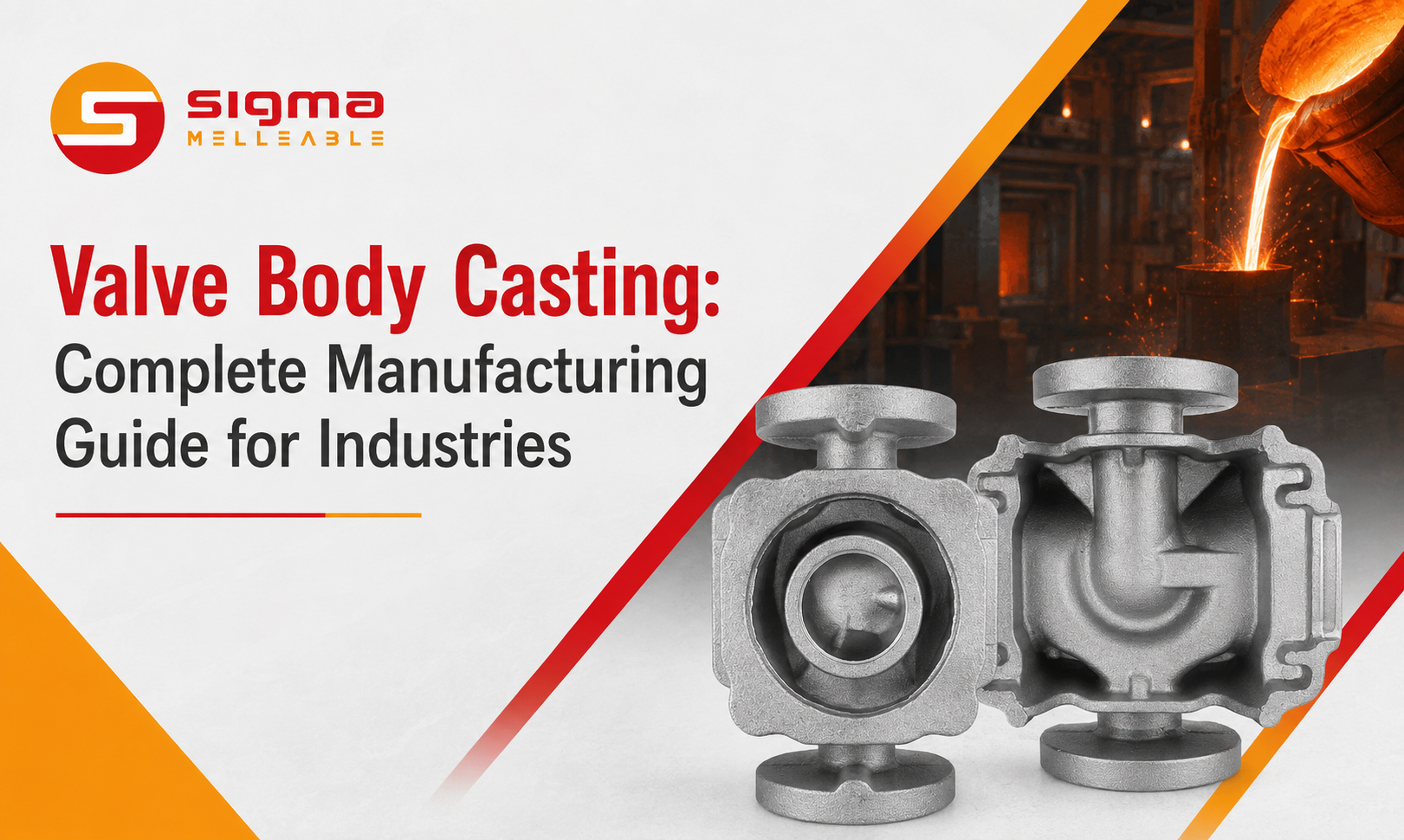
Valve Body Casting: Complete Manufacturing Guide for Industries
Valves are an integral part of various industrial systems, such as oil refineries, chemical plants, or water treatment systems. In any case, a valve consists of the body that holds all the internal elements, which direct and restrict the flow of liquids, gases, or steam under pressure.
In many cases, this element determines the durability and performance of the whole structure; therefore, its quality is vital. The following article gives a thorough insight into the production process of industrial valve body castings, materials used for manufacture, and some important considerations that influence their quality.
Manufacture of Industrial Valve Bodies: Overview
A valve body is a housing part of a valve that provides its functionality and serves as its outer casing. It is created with the help of the process called casting, which is considered to be an optimal method to provide quality and high-performance parts.
The valve casting process allows the creation of valve parts of any shape and dimensions.
Valve Casting Importance
As mentioned above, this element has a significant influence on the performance of a valve. Therefore, the valve castings should be resistant to:
- Pressure and heat
- Fluids (especially corrosive)
- Mechanical forces
It means that only correctly manufactured parts would be able to withstand such conditions.
Industries that Need Valve Body Castings
The majority of industrial enterprises and systems have valves in their equipment; among them, we may find such types of business as:
- Marine industry
- Water supply
- Oil and gas industry
- Power engineering
Such companies need durable, reliable, and high-performing valve body casting.
Process of Creating Valve Bodies
The valve casting process includes several major stages, each of which significantly contributes to the performance and quality of final parts.
Creation of Pattern
As you may guess, it is crucial to have a template of the desired product in advance. To do this, engineers create a pattern based on all necessary requirements, including pressure tolerance, material used, and dimensions of the part.
With the help of modern CAD technologies, it is now easier to create correct patterns.
Preparation of Mold
Based on a created pattern, molds are designed, which will serve as containers to pour molten metal into. They play the main role in the quality of a part.
Therefore, the molds should be thoroughly designed.
Pouring Metal into Molds
One of the most important moments in industrial valve body casting is pouring metal into molds. Before this procedure takes place, the chosen material is melted and heated to the right temperature.
Controlled pouring is one of the key elements in obtaining good results.
Solidification of Metal
Next, the metal in the molds starts to cool down and solidify. During this period, the cooling process should be carefully managed since improper cooling leads to the creation of cracks or other kinds of flaws.
Finishing Process
Finally, after the cooling process ends, the cast part should go through finishing processes. After being taken out of the mold, a product is cleaned of additional substances and gates.
Further, there comes the dimensional inspection of the part and the surface cleaning procedure.
Materials Commonly Used for Valve Body Casting
The choice of materials greatly depends on what kind of valve body will be created.
Cast Iron Valve Body
A cast iron valve body is commonly used for water delivery systems, HVAC systems, and applications working under low-pressure conditions.
Some advantages include:
- Easy machining
- Affordability
- Great resistance to wear
- Performance efficiency
Cast iron remains one of the most popular materials used for valves.
Ductile Iron
Ductile iron provides higher resistance and increased flexibility compared to ordinary cast iron.
It is preferred when additional impact resistance is needed.
Carbon Steel and Stainless Steel
Steel-based casting materials are usually preferred for use in industrial systems for the following reasons:
- Increased resistance to pressure
- Increased mechanical strength
- Corrosion resistance
- Long-term service life
These materials are extensively used in demanding industrial applications.
Valve Body Manufacturing Quality Assurance
Quality assurance during the process of valve body manufacturing ensures high-quality castings.
Dimensional Inspection
Manufacturers check the dimensions of cast parts to see whether they match the standards.
Specialized measuring instruments contribute to maintaining constant dimensions in different casts.
Material Testing
Material testing ensures that the casting possesses the necessary characteristics, mechanical and chemical.
Common tests include:
- Tensile strength testing
- Hardness testing
- Chemical composition analysis
- Impact testing
Non-Destructive Testing
Most companies use various forms of non-destructive testing, including:
- Ultrasonic testing
- Magnetic particle inspection
- Dye penetrant testing
- Radiographic testing
Custom Valve Body Castings for Industrial Applications
Sometimes, special valve bodies have to be created because standard products do not satisfy the demands of the application.
Special valve body castings allow manufacturing parts which will fit perfectly into existing systems, provide required performance, durability, etc.
Custom valve castings can offer:
- Improved performance
- Better fit
- Enhanced longevity
- Special design features
Such a possibility allows creating special valve body castings which would perfectly suit the requirements of the application.
Valve Body Casting Manufacturer: What to Look for When Making Your Choice
Your choice of valve body casting manufacturer may affect product quality and longevity greatly.
When selecting a supplier, take into account the following factors:
- Manufacturing experience
- Quality certifications
- Material capabilities
- Testing facilities
- Production capacity
- Shipping speed
A trusted valve body casting manufacturer in India must be able to offer its clients quality, experience, and support.
Best Practices for Purchasing Industrial Valve Body Castings
Define the Application Requirements
Specify such parameters as:
- Pressure rating
- Maximum operating temperature
- Fluid characteristics
- Environment
Select the Appropriate Material
Select materials that will fit your operating conditions and your expectations regarding performance.
Check for Compliance with Quality Standards
Check if the supplier follows required industry standards and conducts adequate testing procedures.
Work with Experienced Manufacturers
An experienced supplier will be able to recommend the most appropriate manufacturing solution and reduce risks.
Why Work with Sigma Melleable?
Sigma Melleable specializes in industrial casting and aims at providing customers with quality-driven services and solutions. The company offers manufacturing, casting, and quality assurance assistance for its clients who work with demanding applications.
Conclusion
Valve body casting is a complex manufacturing process whose results are crucial for the functionality and safety of valve systems. Each step from creating a pattern to conducting quality tests is crucial for the final result.
Regardless of what kind of valve body casting you need to create – a standard valve body casting, a reliable cast iron valve body, or some other variant – you will be assisted by experts who understand how to produce castings efficiently.
If you want to know more about valve body manufacturing, contact Sigma Melleable at +91 99093 80133 or email info@sigmamelleable.com.
-
What is Connector Valve Casting? Complete Guide for Industrial Applications
-
How to Choose the Right Farm Equipment Casting Manufacturer
-
Valve Body Casting: Complete Manufacturing Guide for Industries
-
What Is Valve Casting? - Beginner Guide
-
How to Pick the Right Cast Iron Fitting for Your Project
-
Essential Submersible Pump Motor Parts: Lower Manifold, Upper Manifold & Discharge Head